
Designing a custom sleeping setup requires a deep understanding of your specific vehicle’s interior geometry. A design that works flawlessly inside a massive truck bed will fail completely inside a compact crossover SUV.
Successful mobile design focuses on maximizing every available square inch of interior space. It requires careful planning around wheel wells, folded seat heights, and total vertical headspace.
Tailoring Your Car Camping Platform
The perfect setup must conform seamlessly to your vehicle’s interior contours. It should optimize your sleeping area without blocking your rearview visibility or trapping your gear in unreachable corners.
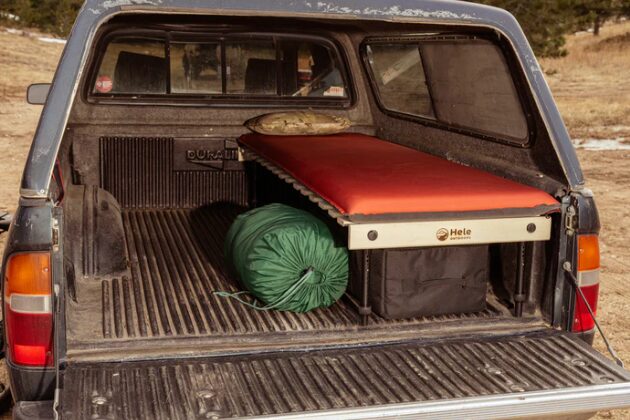
If you own multiple vehicles or want a versatile option, using an adjustable Car camping platform like the Hele Box offers a universal fit across various SUVs, trucks, and vans.
Measuring for Vertical Headspace
Headspace is the most overlooked factor in vehicle design. You need enough room to sit up comfortably without banging your head on the ceiling. Measure carefully from the roof down before determining your deck height.
Accounting for Interior Obstacles
Every vehicle has unique obstacles like protruding wheel wells, seatbelt anchors, and side panels. Your design must feature clever cutouts or contours to fit snugly against these factory interior pieces.
Designing for SUV Layouts
SUVs are incredibly popular for mobile camping because they offer fully enclosed, climate-controlled cabins. However, their sloping roofs and folding rear seats present unique design challenges for builders.
Managing the Rear Seat Fold Slope
In many SUVs, the second-row seats do not fold completely flat. They often rest at a slight upward angle. Your deck design must use taller rear legs to counteract this slope and create a level bed.
Removable Passenger Seat Designs
If you camp solo, consider removing the rear seats entirely. This opens up massive amounts of vertical space and lowers your overall center of gravity. It allows for much deeper storage drawers beneath your bed.
Multi-Piece Folding Platforms
A multi-piece folding deck allows you to keep your rear seats usable during the week. When the weekend arrives, you simply fold the seats down and flip the front extension panel forward over them.
Optimizing Crossover SUVs (CUVs)
Compact crossovers have limited headroom and length. For these smaller vehicles, keep the deck as low to the floor as possible. Focus on using thin, high-strength materials to maximize precious vertical space.
Designing for Truck Beds
Pickup trucks offer massive width and length, making them incredible camping platforms. However, because truck beds are completely exposed to the elements, they require a heavy-duty camper shell or canopy.
Building Around Truck Wheel Wells
Truck beds feature large, structural wheel wells that eat up valuable floor space. Design your deck to sit exactly level with the top of the wheel wells. This creates a massive, uninterrupted sleeping surface.
Utilizing Side Cubby Storage
The space between the wheel wells and the truck bed walls is perfect for specialized storage. You can design long, narrow top-access cubbies to hold flashlights, tools, and water bottles safely.
Implementing Heavy-Duty Drawer Slides
Truck beds are incredibly deep, making it hard to reach items near the cab. Installing long, 4-foot sliding drawers allows you to pull all your cooking gear and supplies out into the open instantly.
Designing for Camper Vans and Minivans
Vans offer the ultimate luxury of stand-up headroom and immense square footage. Minivans are secret camping champions because their low floors and stow-and-go seating provide unmatched interior volume.
Creating a Fixed vs Convertible Dinette
With ample van space, you can design a convertible dinette system. The center section of the bed slides up to become a table, while the side sections serve as benches for comfortable indoor dining during storms.
Maximizing Vertical Storage Towers
Take advantage of a van’s tall vertical walls by building shelving units next to your bed. This allows you to store clothing and gear vertically, keeping your main sleeping deck completely clear.
Conclusion
There is no single correct way to design a mobile sleeping setup. The best design is the one that fits your vehicle perfectly and matches your specific travel style. Carefully measure your space and plan ahead.
Whether you drive a compact SUV, a rugged truck, or a spacious van, a smart design unlocks incredible adventures. Start planning your layout today and transform your vehicle into the ultimate travel companion.