

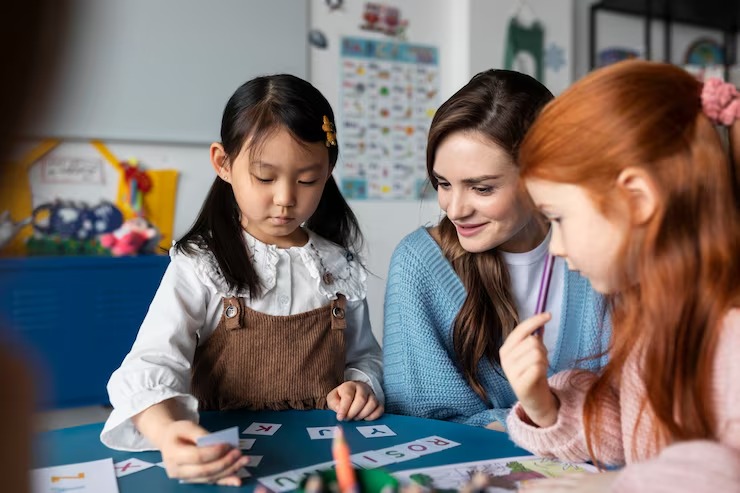
There is a principle in education that most parents intuitively understand even if they have never heard it stated formally: children learn better by doing than by being told. This is the core idea behind Experiential learning for kids, and it is backed by decades of research into how young brains actually develop understanding.
When a child touches, builds, compares, and rearranges physical objects, they are not just playing. They are encoding knowledge in a way that abstract instruction simply cannot replicate. They are making meaning through experience, and that meaning stays with them in a way that memorized information rarely does.
What Experiential Learning for Kids Actually Means
How Experiential Learning for Kids Works in Practice
Experiential learning is often confused with unstructured play. The two are related but not the same. Unstructured play gives children freedom to explore without guidance. Experiential learning gives children freedom to explore within a carefully designed structure that ensures their discoveries lead somewhere meaningful.
At SunStart, every learning activity is built as a complete experiential cycle. Children begin with a story that creates context and curiosity. They then explore the concept through digital lessons and hands-on materials, making observations and testing ideas. After exploration, workbooks help them record and reflect on what they found. Finally, guided discussion with a parent or teacher helps them articulate and organize their thinking.
Why Hands-On Learning Is Central to the SunStart System
Hands-on learning is not an optional enhancement in the SunStart system. It is a structural pillar. The program’s teaching aids are specifically designed to make abstract mathematical concepts concrete and visible. Children can build three-dimensional structures, arrange and compare quantities, and explore spatial relationships through touch and movement.
This physical dimension of learning is particularly important for young children because their cognitive development is closely tied to sensory and motor experience. When a child builds something and then describes what they notice, they are using multiple cognitive pathways simultaneously, which dramatically deepens the learning.
The Three Learning Modes SunStart Uses
How Experiential Learning for Kids Happens Across Contexts
SunStart is designed to support three distinct learning scenarios, each of which involves active, experiential engagement.
In independent discovery mode, children explore activities on their own using digital courseware and teaching aids. Built-in hints and multiple feedback pathways ensure that children can continue moving forward without adult intervention.
In expert mentorship mode, a teacher or guide introduces challenges and facilitates discovery through questions. This mode deepens the quality of exploration by introducing additional perspectives and challenges.
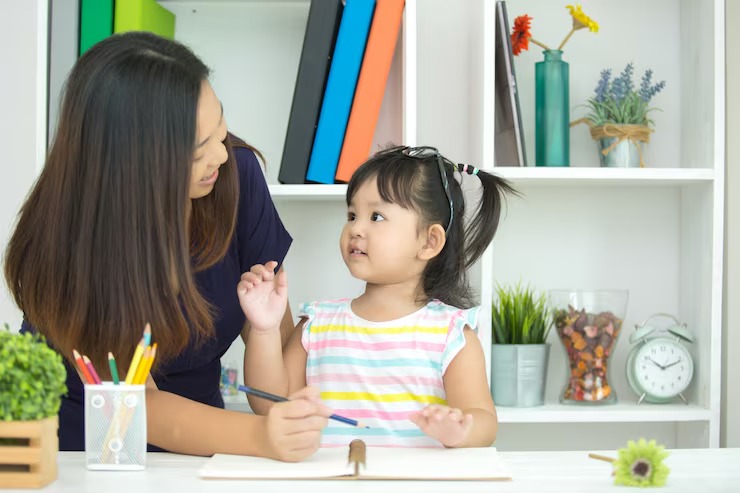
In family learning mode, parents and children explore together. This shared experience not only deepens mathematical understanding but creates meaningful moments of connection and collaboration around learning.
Key Outcomes of Experiential Learning for Kids
- Genuine understanding rather than surface-level familiarity with concepts
- Confidence in approaching unfamiliar problems without fear
- Fine motor skills and hand-eye coordination developed through physical manipulation
- Spatial reasoning built through building, arranging, and comparing objects
- The habit of reflecting on and articulating one’s own thinking process
These outcomes extend far beyond mathematics. Children who develop these habits through experiential learning become stronger readers, more creative problem solvers, and more adaptable learners across all subjects.
Why Experience Leads to Confidence
How Hands-On Learning Builds the Learner’s Self-Image
One of the most profound outcomes of well-designed experiential learning is the shift in how children see themselves as learners. When a child moves through the cycle of not knowing, exploring, discovering, and understanding, they experience directly that their own thinking can solve problems. That experience, repeated consistently, fundamentally changes a child’s relationship with challenge.
SunStart’s curriculum is designed to ensure that every child experiences genuine discovery at every level of the program. The structure supports differentiated engagement so that children who need more scaffolding receive it, while children who are ready for additional challenge encounter it naturally.
Conclusion
Experiential learning for kids is not a trend or a philosophy. It is a recognition of how children’s minds actually work. When learning is grounded in exploration, reflection, and hands-on discovery, children develop understanding that is deep, flexible, and lasting. SunStart has built a complete learning system around this principle, producing outcomes that go far beyond mathematics and into the habits and mindset of lifelong learning.
Frequently Asked Questions
Q1: How does SunStart ensure experiential learning stays structured and not just freeplay? Each SunStart activity follows a designed cycle: story context, exploration with digital and physical tools, workbook reflection, and guided discussion. This structure ensures that children’s exploration leads to genuine conceptual understanding.
Q2: Can experiential learning work for children who prefer quieter, less tactile activities? Yes. SunStart’s system includes digital courseware, story-based activities, and workbook components alongside physical materials. Different children engage most deeply with different parts of the system, and all pathways lead to the same learning outcomes.
Q3: How does experiential learning for kids connect to later academic performance? Research consistently shows that children who develop thinking habits through experiential learning perform better academically because they understand concepts rather than simply recalling procedures. They are also more resilient when they encounter new or difficult material.