
Sustainability conversations in warehouses usually center around solar panels, LED retrofits, or better insulation, and those are all worth pursuing. But there’s a surface-level decision – literally – that rarely makes the list even though it plays a bigger role than most people realize. Warehouse epoxy flooring doesn’t get much attention in sustainability planning, yet it directly affects material waste, energy use, and how often resources get spent replacing something that shouldn’t have needed replacing so soon. If your facility is genuinely trying to operate more responsibly, the floor deserves a spot in that conversation.
Why Epoxy Flooring for Warehousing Fits Into a Broader Sustainability Strategy
Sustainability isn’t only about adding new green technology; it’s also about reducing waste from things that fail too early. A concrete floor that cracks, pits, and needs resurfacing every couple of years generates a steady stream of discarded material, repeated resource use, and repair-related emissions that add up over the life of a building. None of that shows up in a typical sustainability report, but it’s happening anyway.
A properly installed coating interrupts that cycle by lasting significantly longer than untreated or poorly maintained concrete. Facilities that choose Warehouse epoxy flooring over repeated patch jobs typically see fewer resurfacing projects, less waste hauled away, and less energy spent running equipment for repeated repair work. It’s a quieter kind of sustainability gain, but a real one.
Reducing the Environmental Cost of Constant Repairs
Every repair cycle carries a footprint that’s easy to overlook – transportation of materials, energy used during application, and the disposal of whatever gets removed in the process. Stretching the lifespan of a floor from a few years to well over a decade cuts that footprint dramatically over time, simply by needing the process far less often. It’s one of the more straightforward ways a facility can reduce its overall material consumption without changing anything about daily operations.
Improving Energy Efficiency Through Better Flooring Choices
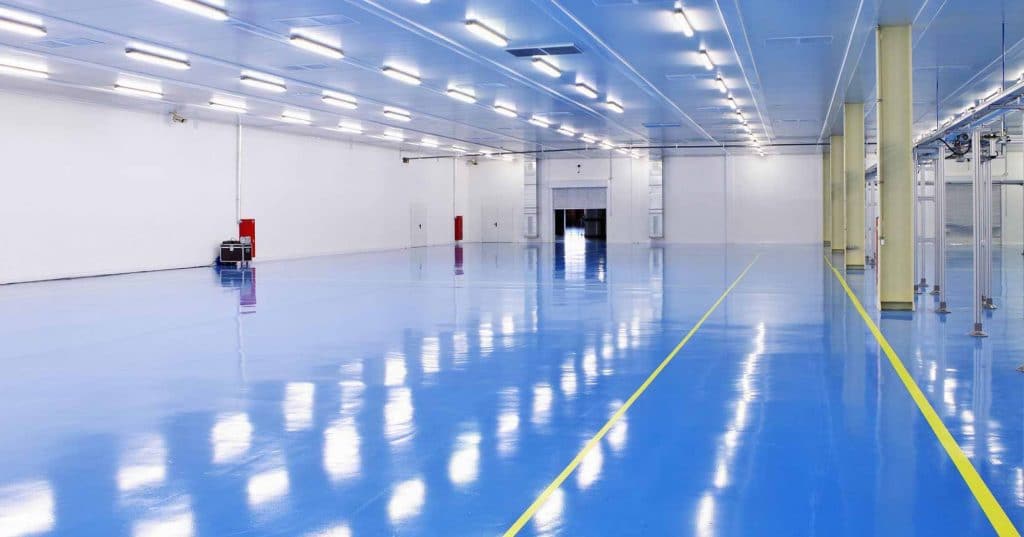
Lighter, reflective coatings do more than just look clean; they actually reduce how much artificial lighting a space needs to stay well lit. Instead of relying entirely on overhead fixtures, a bright, seamless floor bounces existing light around the space more effectively, which can meaningfully cut electricity use across large warehouse footprints where lighting runs constantly.
There’s also a maintenance-related energy savings that’s easy to miss. Sealed surfaces are simpler and faster to clean, which means less time running floor scrubbers, less water used during cleaning cycles, and fewer harsh chemical cleaners needed to deal with stains soaked into porous concrete.
How Epoxy Flooring for Warehousing Reduces Material Waste Over Time
Facilities focused on long-term sustainability often find that flooring choices quietly support goals that seem unrelated at first glance. Epoxy flooring for warehousing extends the usable life of the concrete underneath it, which means fewer full resurfacing projects, less demolition debris, and a lower overall material footprint across the life of the building. It’s the kind of improvement that keeps paying off without needing ongoing attention once it’s in place.
Choosing Materials and Contractors That Align With Sustainability Goals
Not every coating system is created equal when it comes to environmental impact, so it’s worth asking questions before committing to a product. Low-VOC formulations reduce indoor air quality concerns during and after installation, and some systems are specifically designed with recycled or lower-impact materials in mind.
One good question to bring to any contractor conversation:
- Ask whether they offer low-VOC or environmentally certified coating options, since not every provider stocks these by default even when they’re available.
Getting a clear answer here tends to separate contractors who’ve thought seriously about sustainability from ones who haven’t considered it much at all. A team experienced with Warehouse epoxy flooring projects that prioritize environmental impact will usually walk you through material options without hesitation, since it’s a question they’ve fielded before from facilities with the same priorities.
Conclusion
Sustainability planning often overlooks the floor entirely, even though it quietly influences waste, energy use, and material consumption over the life of a building. Choosing a durable, properly installed coating is a straightforward way to reduce that footprint without disrupting daily operations or requiring a major overhaul. When you’re ready to bring flooring into that broader strategy, High Performance Systems brings the kind of practical experience that helps this decision support real environmental goals instead of just checking a box. It’s a change that keeps contributing to a more responsible operation long after installation is complete.
Frequently Asked Questions
- Does this type of flooringreduceenvironmental impact?
Yes, primarily by extending the life of the concrete, which reduces how often resurfacing and related material waste occur over time.
- Are low-VOC coating options available for facilities concerned about air quality?
Often, yes. Many contractors offer low-VOC formulations, though it’s worth asking directly since not every provider stocks them by default.
- Can this upgrade help reduce lighting-related energy costs?
Yes, lighter, reflective coatings improve how well existing light is distributed, which can reduce reliance on additional overhead fixtures.
- Does easier cleaningactually translateinto meaningful savings?
It can. Sealed surfaces typically require less water, fewer harsh chemicals, and less time to maintain compared to untreated concrete.
- Is this kind of upgrade worth including in a formal sustainability report?
It can be, since reduced material waste and lower resource use over time are measurable outcomes worth documenting.