

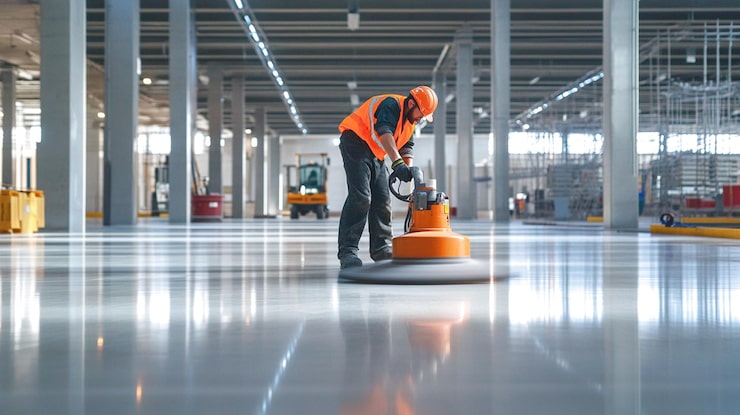
Picture a Tuesday morning at a distribution hub. A forklift driver slows near one patch of floor he’s learned to dodge, because last month a pallet jolted there and half the load slid sideways. Everybody on the shift knows the spot. Nobody has fixed it.
So what do you do about a floor like that? Honestly, you stop patching and call epoxy flooring contractors who can rebuild the surface from the concrete up. A thin coat of paint won’t survive that traffic, and it only hides the problem for a few weeks.
How a Warehouse Floor Gets Tired
Heavy Loads and Tight Turns
Concrete is tough, sure, but not endlessly so. Hard wheels carrying heavy loads turn through the same aisles all day, and the corners give up first. Edges chip. Joints open a little wider each season. Then dust starts lifting off the surface, and once that powder lands on shoes and shelves, the floor is already telling you something.
Walk the aisle with a flashlight held low and you’ll see it, a faint ripple where the surface is wearing in lanes. Those lanes line up with the routes drivers take every single day. Fix the wear early and the repair stays small. Wait, and the whole aisle is up for discussion.
Spills Nobody Reports
Then there’s the quiet damage. A little oil from a leaking machine, some cleaner splashed near the dock door. Bare concrete drinks all of it in.
Say a supervisor walks the building after a long weekend and finds a dark stain that wasn’t there on Friday. By now it has soaked deep, and scrubbing just spreads it wider. That’s usually when somebody finally picks up the phone.
Where the Right Contractor Earns the Fee
Ask facility people and you’ll hear the same thing: the coating is the easy part, and the prep is the job. HPS Flooring LLC, based in Green Brook, New Jersey, says it has been installing epoxy floors since 1988. Nearly four decades is a long time to watch what happens when prep gets rushed, and good epoxy flooring contractors treat the slab like a patient before anything gets poured on it.
Grinding, Blasting and the Surface Profile
On its site, HPS talks about precision shot blasting or diamond grinding to reach an exact Concrete Surface Profile, usually shortened to CSP. That number decides how well the coating can grip. Too smooth and it has nothing to bite into. Peeling follows.
Moisture testing comes up too. It sounds dull until you’ve watched a coating bubble because water kept rising through the slab. Nobody enjoys explaining that to the plant owner. It’s also the step that tends to get skipped when somebody is rushing, so ask to see it written down.
A Mix Built for Your Floor
HPS says it builds each mix around how hard the floor gets hit and what chemicals land on it, with moisture factored in. It also says it isn’t tied to a single manufacturer and sources from the industry’s top suppliers. So the choice should follow the floor, not a sales deal.
Picking a System That Fits the Building
Multi Coat Protection for Rough Work
For warehouses and heavy manufacturing, the page describes high solids, multi coat systems made to handle forklift traffic and chemical exposure. Think of layers that each do a separate job, not one skin stretched over everything.
Bigger spaces sometimes go another way. The page mentions liquid densifiers that soak into the concrete to harden it and cut the dust, stretching its life without a full coating. A good epoxy flooring contractor will tell you straight which one your building needs, even when the answer is the cheaper one.
Decorative Flake Where People Walk
Not every corner of a site is a loading bay. Locker rooms, corridors and community spaces get a different treatment, and HPS lists decorative flake systems with slip resistant, multi color finishes for those. It’s a small detail, but a floor that looks decent and grips well makes staff areas feel looked after.
Habits matter here too. People cross the same corridor in wet boots and nobody thinks twice, right up until somebody slips and a wet shift turns into an incident report.
What a Floor Is Worth Over Time
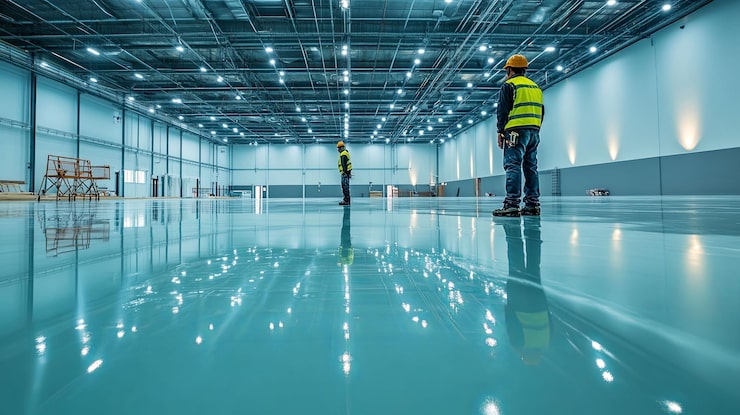
HPS says a properly installed system can run ten to twenty years. That’s a wide range, and traffic and prep decide where you land, but even the low end beats redoing a patched floor every couple of seasons. The page also claims its coatings routinely outlast cheaper, poorly prepped alternatives, which is a line you’ll want to test by asking for references.
A bad floor is rarely cheap. You pay for it in repairs and in the afternoon somebody trips on a lifted edge, and then it’s a different kind of bill.
Working Around a Busy Dock
Say the schedule only lets you close half the building at a time, because trucks still have to load at six every morning. An epoxy flooring contractor who talks about phasing before you ask is worth keeping on the list.
HPS says it aims for minimal downtime and on time delivery, so ask how the work gets sequenced. Which aisles close first? How long does the floor stay off limits?
Reading a Proposal Without Squinting
Say two quotes land on your desk the same day. One is a single page with a price per square foot. The other spells out the grinding method, the number of coats and who is actually doing the work. The second takes longer to read, and it’s the one that tells you something.
HPS makes a point of saying it uses no subcontractors, so the same crew that grinds the floor also lays the topcoat. Whoever you hire, ask about that. Hand offs between companies are where details go missing, and any epoxy flooring contractor you shortlist should be happy to put the answers on paper. The better epoxy flooring contractors don’t mind the questions at all.
The Short Version
If your floor chips, dusts or stains, get a few epoxy flooring contractors to look at it before the damage spreads. Ask about prep first, system second, price last.
HPS Flooring LLC has a free appointment form on its site, and it says it serves Somerset and Middlesex County along with wider parts of New Jersey. Start there, or with any crew you trust, but start while the cracks are still small.
FAQs
What’s a normal lifespan for an epoxy warehouse floor?
HPS says a properly installed system can run ten to twenty years, depending on traffic and prep.
Do I need prep work before coating?
Yes. HPS describes shot blasting or diamond grinding to reach the right CSP, plus moisture testing.
Does HPS use subcontractors?
It says no. Its own crews handle the job from grinding to the final topcoat.
What should I ask an epoxy flooring contractor before signing?
Ask about surface prep, moisture testing, how long the floor stays closed, and whether the warranty is in writing.